
“Based on our faith, we know that every life is sacred,” said Hr. Eugenia, UUSC’s partner with Scalabrinianas Mission with Migrants and Refugees (SMR), speaking at the second International Migration Review Forum (IMRF) in early May.
The IMRF takes place every four years. Participants review progress against the Global Compact on Safe, Orderly and Regular Migration (GCM). The IMRF convenes governments, the private sector, local authorities, unions, and civil society organizations to discuss challenges and exchange good practices on migration. Ultimately, States agree to a negotiated Progress Declaration.
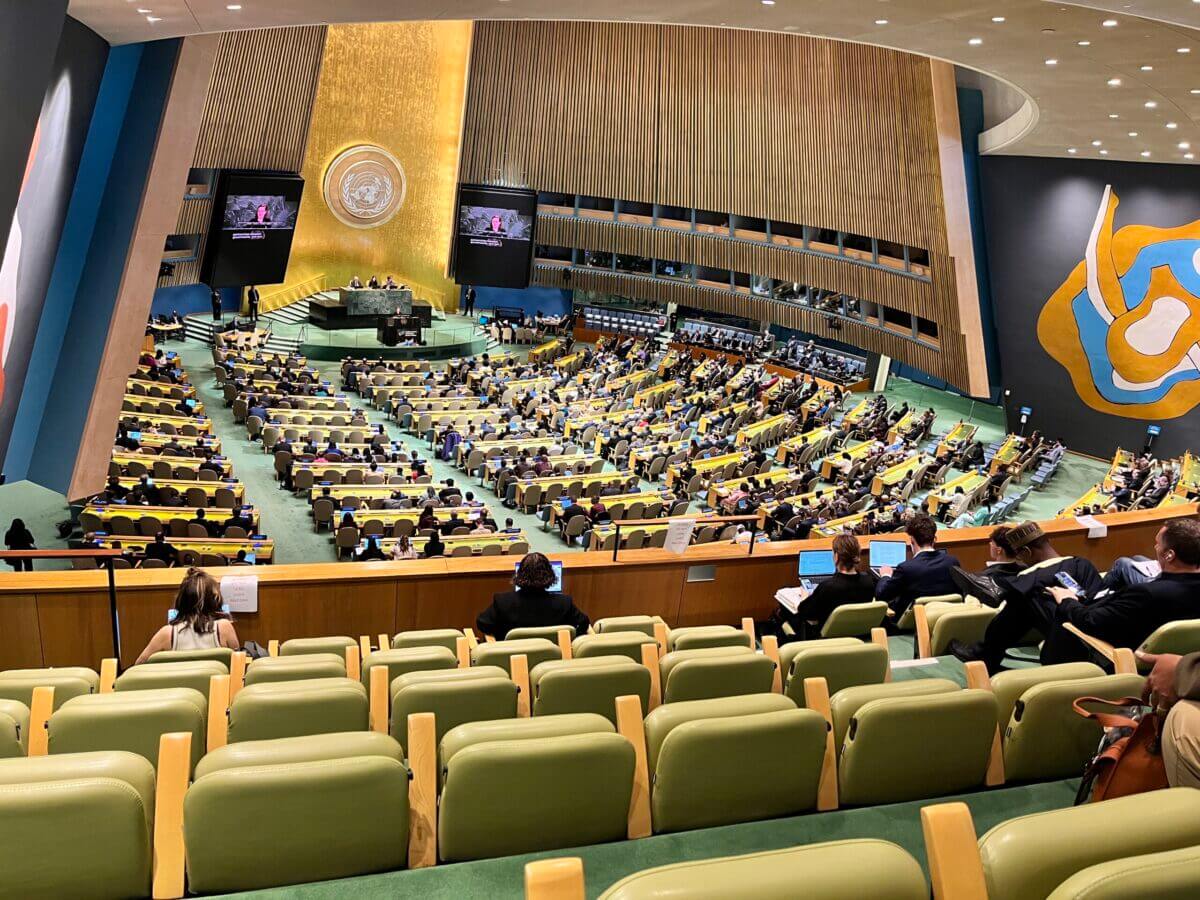
As a Unitarian Universalist organization, UUSC echoes the words of our partner, Hr. Eugenia. Every life is sacred, and thus every life is endowed with rights, regardless of migration status. We attended the IMRF to assert these rights and support our partners’ advocacy efforts.
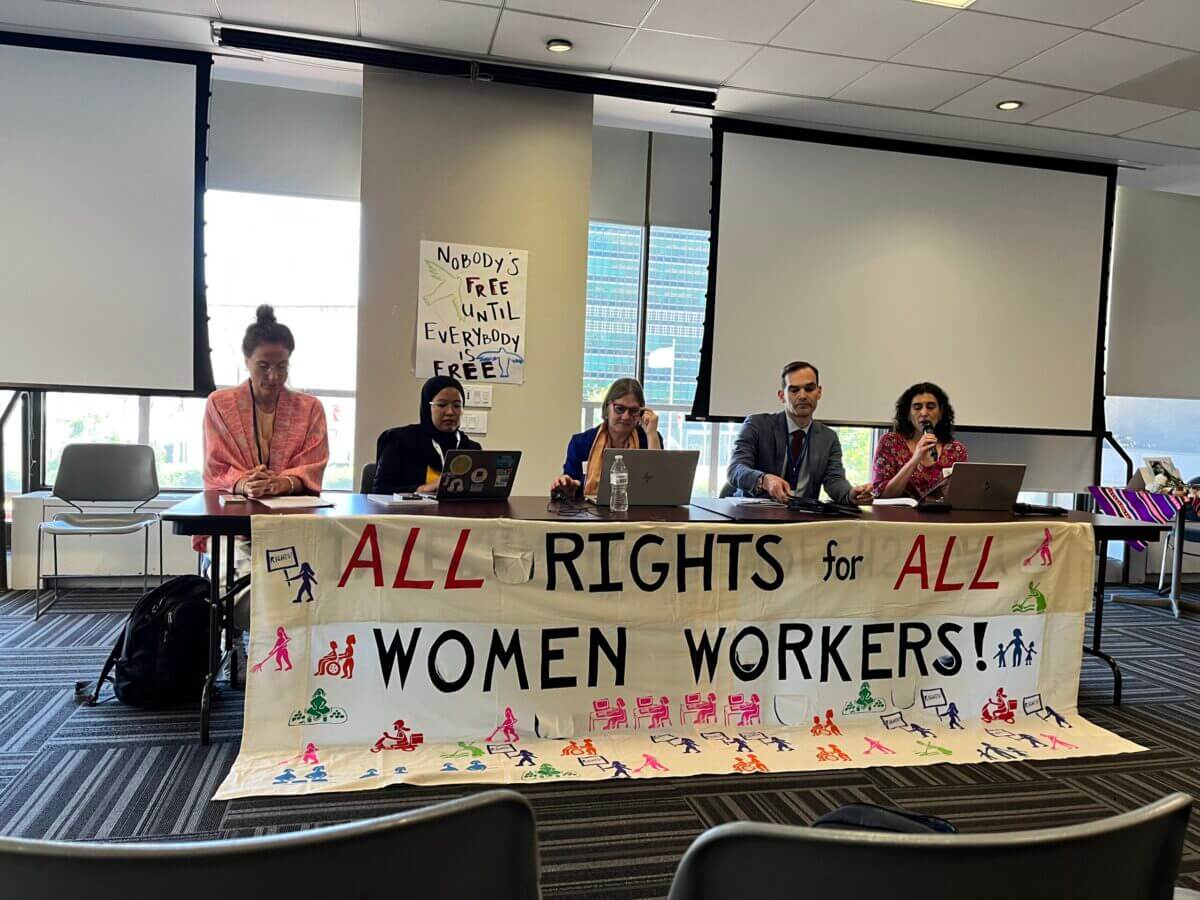
The events kicked off on Sunday, May 3, for a Civil Society Preparatory Day, arranged by the Civil Society Action Committee. As members of the NGO Committee on Migration, UUSC helped organize a panel connecting the state of migration in the United States with the international movement for migration justice.
Audrey McCann opened the panel (you can read her incredible speech here), conveying her experience of community organizing in Minneapolis during the ICE and CBP surge. The rest of the day was split into strategizing across different themes, including criminalization.
One attendee reflected that civil society used to speak of a “whole of route” approach to migration justice, ensuring a chain of protection at every stage of the migration route. Now, however, governments have co-opted this language to promote a chain of deterrence or punishment throughout the migration route. Instead of importing protection, they’re exporting abuses.
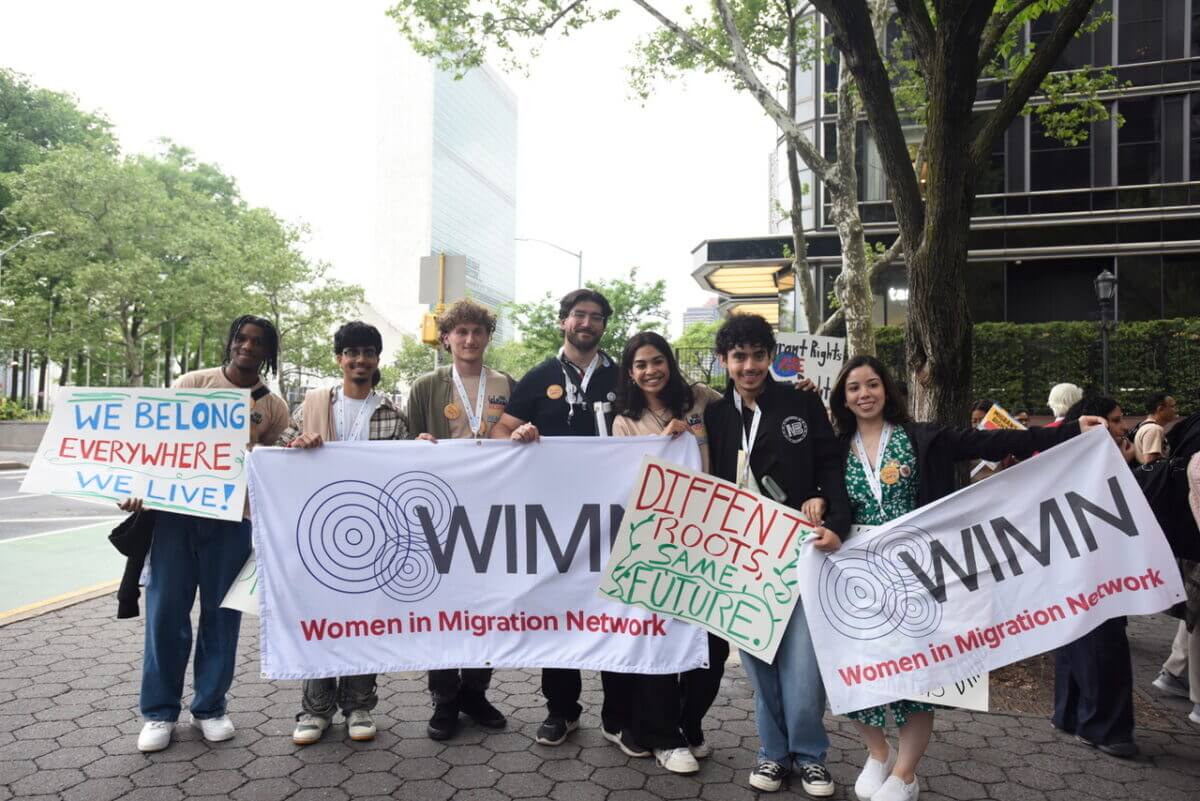
On Wednesday, we co-organized a rally with the NGO Committee on Migration, the Women in Migration Network (WIMN) and other organizations. We demonstrated to show widespread civil society support for migrant rights. We marched and sang outside the UN, and our voices were magnified by the scaffolding we walked under.
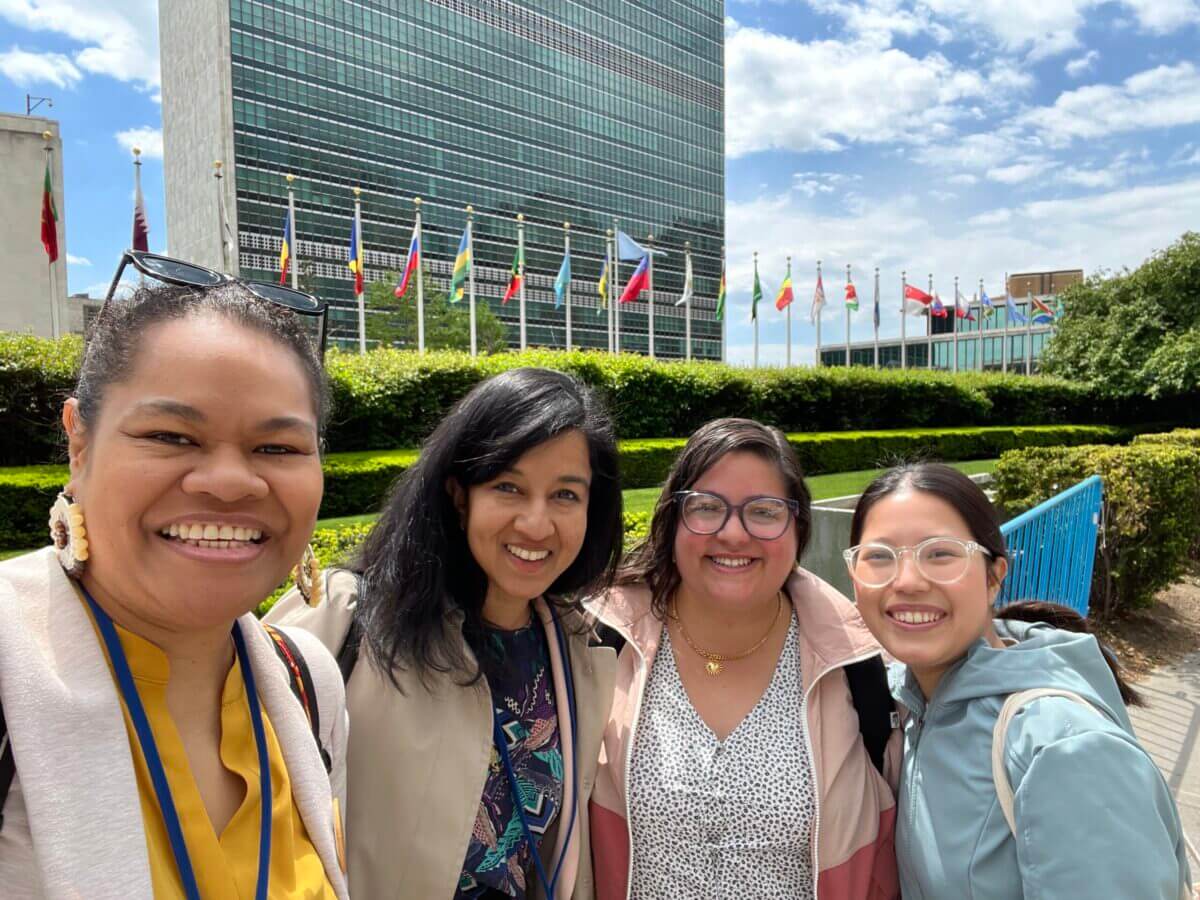
Throughout, we prioritized tracking the intersectional impacts of migration justice. As members of WIMN, we helped monitor the debate for how countries addressed issues of gender. We also participated in the Women’s Caucus, where WIMN launched the Spotlight Report for Global Migration (including a chapter on climate mobility authored by UUSC staff) and diplomats discussed gender-responsive migration policies already underway in their countries. Our strategic partner Pefi Kingi and UUSC’s Director of Advocacy Salote Soqo were two of the three civil society delegates from Pacific island nations (many civil society partners based in the Pacific could not attend due to the $15,000 bond requirement for a U.S. visa). Pefi made several powerful interventions to uplift the issue of climate mobility.
Ultimately, the IMRF resulted in the final adoption of the Progress Declaration. Several countries wanted the text to be less protective of migrant rights, particularly for irregular migrants. “Irregular” is a term for the legal status of a person in migration, referring to individuals who enter, stay, or work in a country without the required authorization or legal documents. Still, these countries joined the consensus to adopt the Progress Declaration without calling a formal vote, while highlighting the non-binding nature of the document, and the “sovereign right of States to determine their own migration policies”.
While the distinction between regular and irregular migration was retained, the Declaration also included important language on the need to respect international human rights law, enact gender-responsive policies, and recognize “the positive role and contribution of migrants at all skill levels.” This is a testament to allied countries and civil society’s efforts to fight for the rights of people in migration.
The U.S. State Department published an abhorrent statement one week after the IMRF, that went further than anything I heard on the floor of the General Assembly. It refers to white supremacist concepts of “replacement migration in Western societies” and migrants “laying waste” to societies. The United States did not participate in the negotiation of the Progress Declaration, and did not attend the IMRF. Frankly, when the U.S. position is this extreme, it is better that they excuse themselves from international debates than poison them.
Today, the Progress Declaration was formally endorsed by the General Assembly. 147 nations voted in favor, 23 abstained and 6 voted against – among them, the United States. They were overwhelmingly outvoted.
Through their endorsements, 147 nations affirm that every life – and each migrants’ life – is indeed sacred.


