Pacific Rising
A network of frontline leaders based in the Pacific region, leading an intersectional approach to climate justice


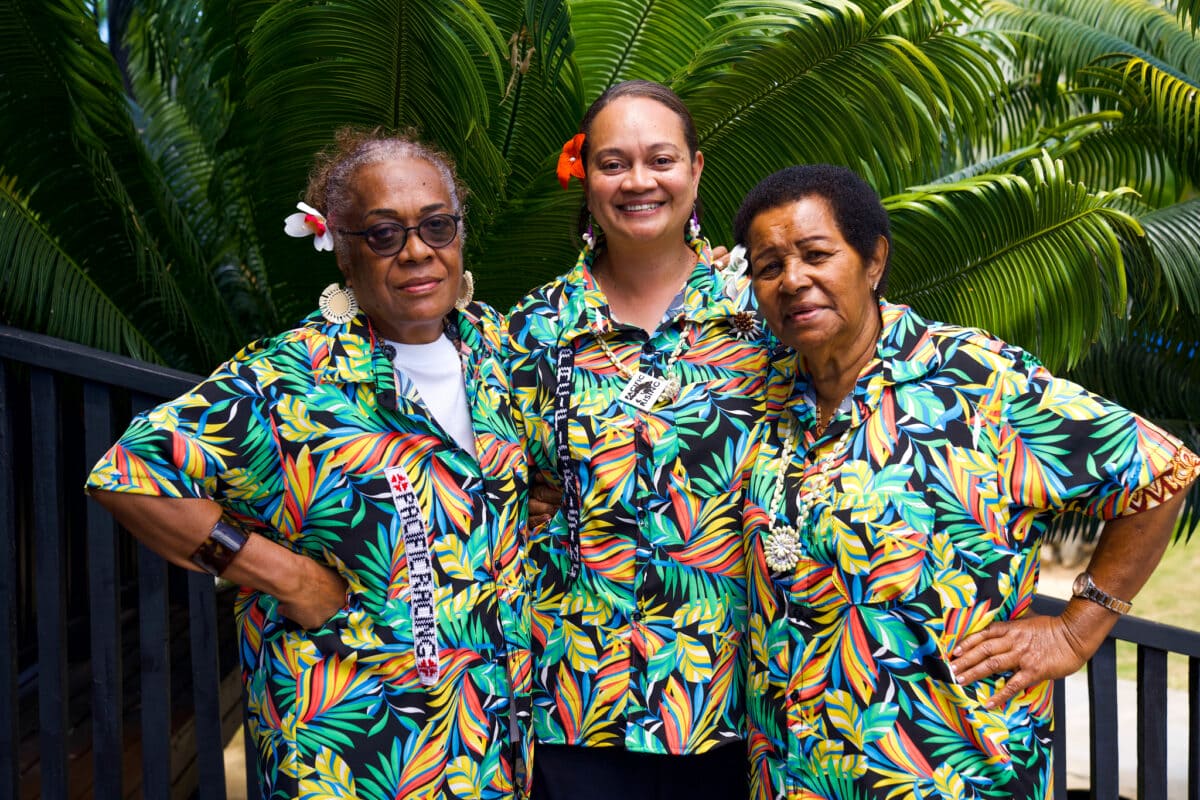
The Leaders
The communities that contribute the least to climate change are most directly impacted by its effects. Climate justice workers in the Pacific have been sounding the alarm about environmental crises for years, but they’re also leading innovative, locally led solutions.
Want to Fund the Future
of Pacific Rising?
UUSC supported grassroots partners in establishing Pacific Rising, an annual network gathering that brings together climate justice organizations from the region to build power, share strategies, and advance community-led solutions. Pacific Rising focuses on their efforts on Non-Economic Loss and Damage, fighting to preserve cultural knowledge, traditional wisdom, and community practices amid land loss and climate change.
The Funders
With support from the Climate Justice Resilience Fund and the Scottish government, UUSC has allocated $1,154,210.00 over three years, with partners collectively deciding to share funding equally among organizations.
Pacific Rising aims to become an independent body. They’re seeking funding to continue and grow their work.
Our Pacific partners
- Banaban Human Rights Defenders Network (Fiji)
- Climate Talk (Fiji)
- Ecological Solutions Foundation Trust Board (Solomon Islands)
- Jo-Jikum (Marshall Islands)
- Kioa Island Community Organization (Fiji)
- Kiribati Climate Action Network (Kiribati)
- Pacific Climate Warriors (Regional)
- Te Toa Matoa (Kiribati)
- Tulele Peisa Inc. (Autonomous Region of Bougainville)
- Tuvalu Climate Action Network (Tuvalu)
The Projects
The following are just a few examples of Pacific Rising projects:
- Jo-Jikum works to preserve Marshallese ancestral intelligence. The organization creates storytelling kiosks to preserve sacred sites that are threatened by climate change. The kiosks include art designed by Marshallese youth and bring oral traditions, legends, and Indigenous ecological knowledge into public spaces.
- Climate Talk Fiji recently published their groundbreaking report, “Climate Change and Human Mobility: Gender Dimensions and NELD.” The report uses data to further assert that the climate crisis has a disproportionate impact on women and gender expansive people. This critical work will guide the efforts of Pacific Island organizations, ensuring that environmental justice efforts incorporate gender equity.
- Tulele Peisa continues to lead the dignified relocation effort on the Carterets Islands, facilitating the relocation of 150 families (1,700 islanders) to safe and secure locations on mainland Bougainville. In addition, the organization works to revive and preserve cultural practices. Their youth education initiative teaches young people traditional skills, crafts, and rituals, fostering reverence through hands-on learning.
These are just a few examples of Pacific Rising’s dynamic project portfolio. Read about more in our 2-pager.


The Methodology
Indigenous Sovereignty is a Climate Solution
The world’s directly-affected Indigenous communities—including in the Pacific—must be the ones to decide for themselves how to allocate resources to address the climate crisis. Amplifying their voices and ability to wield decision-making power helps the entire globe weather this crisis, because they are the ones with the traditional knowledge and skills to address it.
Participatory Grantmaking and Decision Making is Essential for Progress and Human Dignity
Directly affected communities are best positioned to advance solutions. They have the most at stake and have the most insight into the challenges they face. Intended beneficiaries of funds should be the ones to decide how it’s spent. The communities most immediately impacted by environmental policies should be prioritized and meaningfully included in the legislative process.
All Justice Movements are Connected
The burden of climate damage falls inequitably on women, LGBTQI+ folks, elders, youth, and people living with disabilities. We cannot meaningfully work toward climate justice without also incorporating the tenets of all other human rights movements.
Recent convenings and achievements
2025: Diligent Hope in Action
At the fourth Pacific Rising convening in Fiji, grassroots partners strengthened shared strategies while affirming cultural survival and self-determined climate solutions.
2024: The Power of Participatory Decision-Making
For four days in June, 10 climate justice organizations joined together to focus on non-economic loss and damage, establishing guidelines through collaborative and participatory design processes.
2023: Building Strategic Approaches
By uniting 40 people from 13 organizations, we highlighted gaps in mainstream crisis response through powerful community visits.
2022: Establishing the Foundation
The first Pacific Rising network meeting at Pearl Harbor, Serua, Fiji, created space for partners to plan and map out funding needs to resource community-led initiatives.
