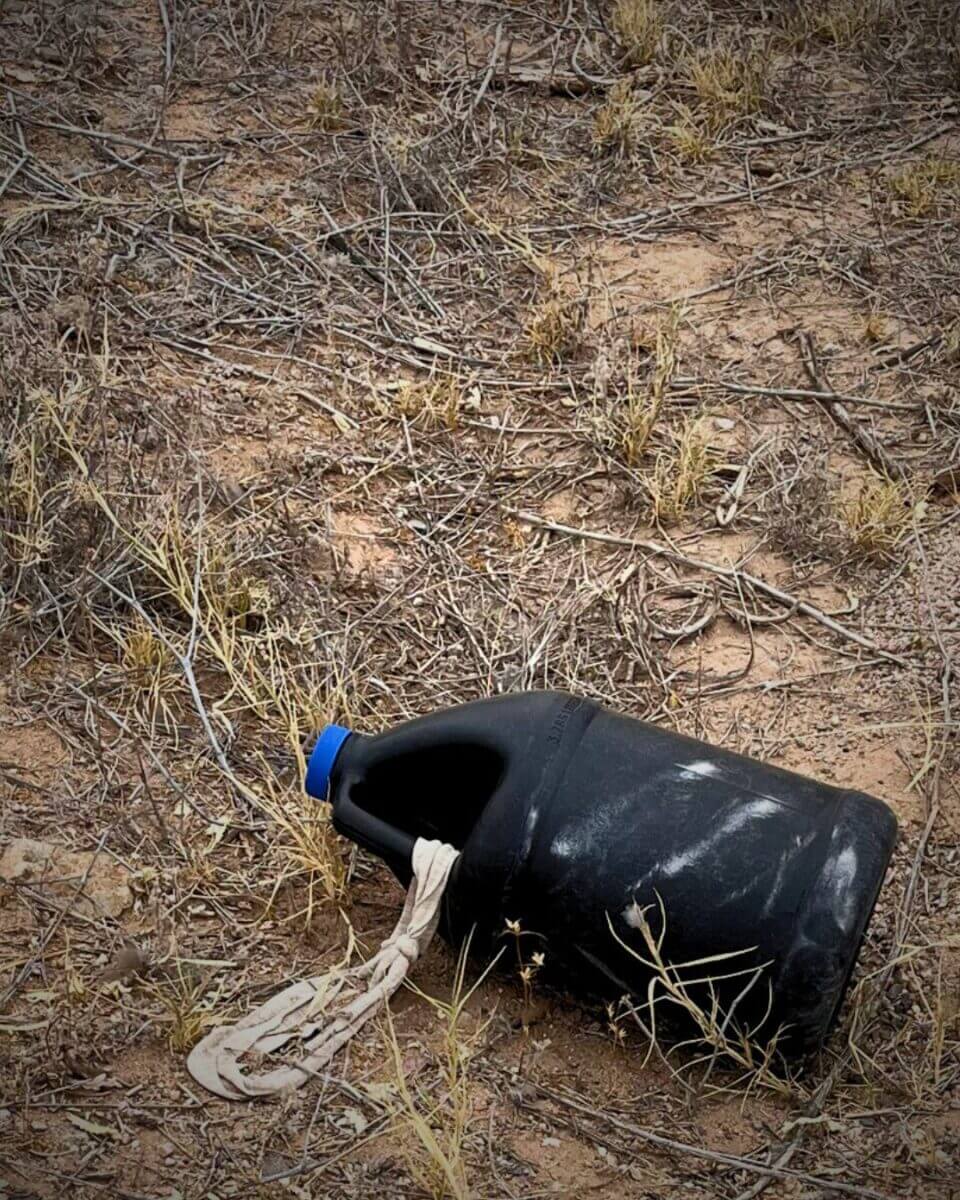
The black-painted plastic jug lay in the ditch beside the road, not far from some cholla cacti, with a scrap of rag tied on as a carrying strap. Kat Rodriguez, one of The Migrant Trail’s founding organizers, called my attention to it. She explained that, at the border, vendors will use spray paint or even sharpies to darken plastic bottles so they do not draw attention. These are then sold as water jugs to people in migration.
The person migrating had most likely been picked up nearby – perhaps by someone they intended to meet, or maybe by Border Patrol. This was the first tangible sign of a person in migration that I saw while taking part in this seven-day, 75-mile walk from the US-Mexico border to Tucson, AZ.
Since 2004, the annual Migrant Trail Walk has been both a memorial and an act of solidarity with people in migration and the thousands who have died crossing the border. Walk organizers explained that since the 1990s, border enforcement “deterrence” policies have intentionally pushed people in migration into the most dangerous terrains, contributing to the ongoing loss of life. More than 8,000 people, including children, have died crossing these regions since this enforcement policy began. In Arizona alone, the remains of 4,467 individuals have been recovered, with thousands more missing. In just the last year, at least 109 people have been found in the Arizona borderlands.

When I traveled to Arizona, I knew only that I was heading to work on an event supported by two UUSC partners, Borderlinks and School of the Americas Watch. I had no expectations, unaware of the exact form my participation would take. My primary role was to drive a support vehicle and lift heavy objects, but twice I also set out from camp on foot. The education and experience I received exceeded any planned curriculum I could have imagined.
A couple of miles before spotting the water bottle, we had emerged from the dusty, unpaved roads of the Buenos Aries Wildlife Refuge onto hot, unforgiving highway pavement to continue our journey north through the Sonoran Desert. That day, we had been gifted overcast skies and temperatures in the high 80s—an answer to one of the prayers woven into the bundles of prayer ties and flags lovingly carried by the group throughout the week.
It is one thing to read about the hardship and death intentionally caused by U.S. border policy. It is another for one’s body to physically catalogue and try to comprehend it in real time.
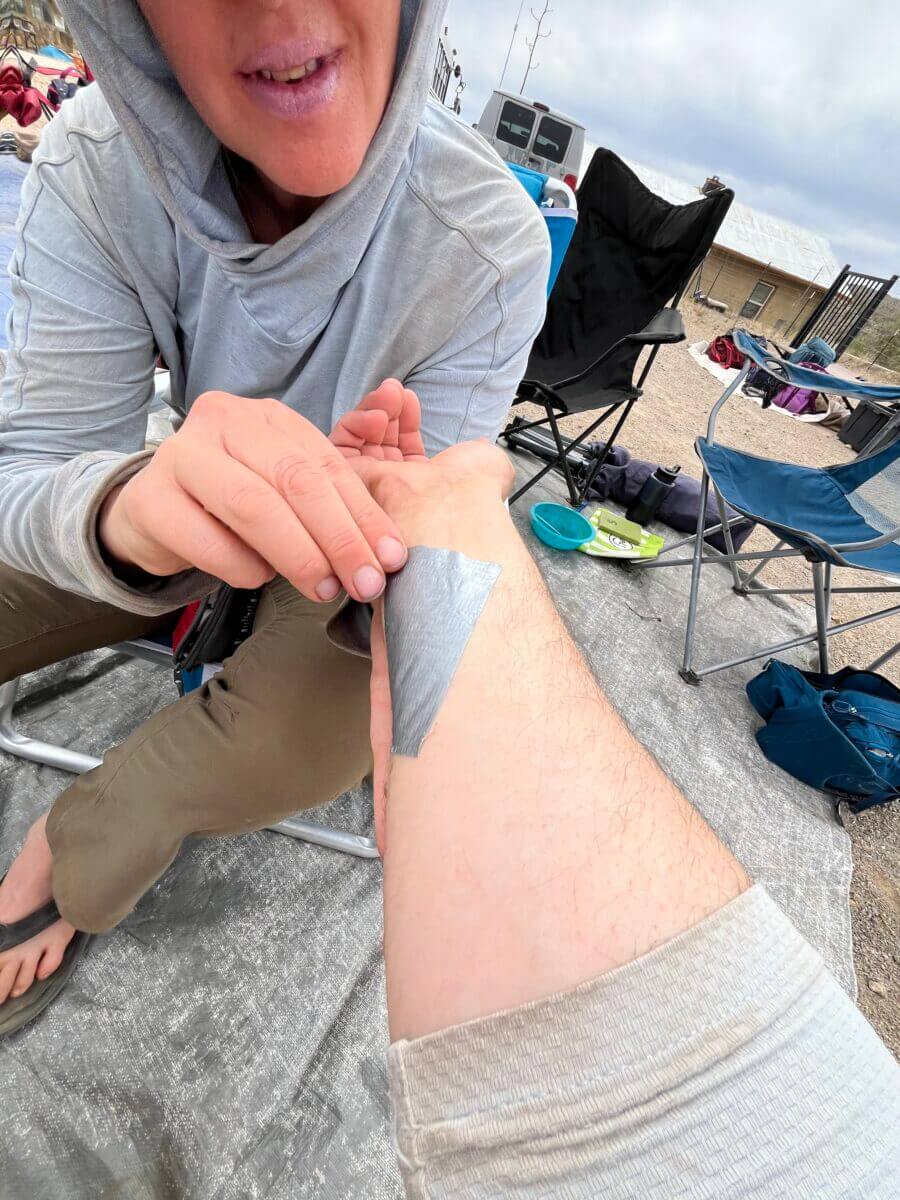
Throughout the week, I thought about navigating this desert if I were fleeing life-threatening conditions in a home I was forced to leave. With my lightweight hiking shoes, UPF-50 clothing, and sunglasses, I was traveling with a supportive group on an established road in broad daylight with plenty of food and water. Our group had complete freedom of movement along our chosen route. Yet, I still managed to end up with too much sun exposure and a cactus spine in my forearm. The cactus spine was expertly extracted by a health team member not long after I noticed it, leaving no ill effects. I could only imagine how I would manage a trek through the unforgiving desert using only moon or starlight.
How would I navigate this cactus-filled landscape? Where would I find respite from the unrelenting sun during the day? How would I feed myself? How would I stay calm while keeping myself— and possibly others with me— safe from discovery, knowing that the U.S. has poured extraordinary levels of resources into locating and detaining people whose only desire is to build a new life and thrive?
To my catalogue of challenges, I added the black-painted water jug and the reality that any drinking water would be relentlessly heated by the Arizona sun.
The Migrant Trail’s vision states:
The precarious reality of our borderlands calls us to walk. We are a spiritually diverse, multi-cultural group who walk together on a journey of peace to remember people, friends and family who have died, others who have crossed, and people who continue to come. We bear witness to the tragedy of death and of the inhumanity in our midst. Lastly, we make this sacred journey as a community, in defiance of the borders that attempt to divide us, committed to working together for the human dignity of all peoples.
Participants came together for the 23rd year of this pilgrimage from all parts of the United States as well as Mexico. We built a single supportive community for seven days, each joining a part of a support team responsible for a portion of the group’s experience. In addition to the physical work we did together, each support team also formed connections through daily reflections on our shared experiences.
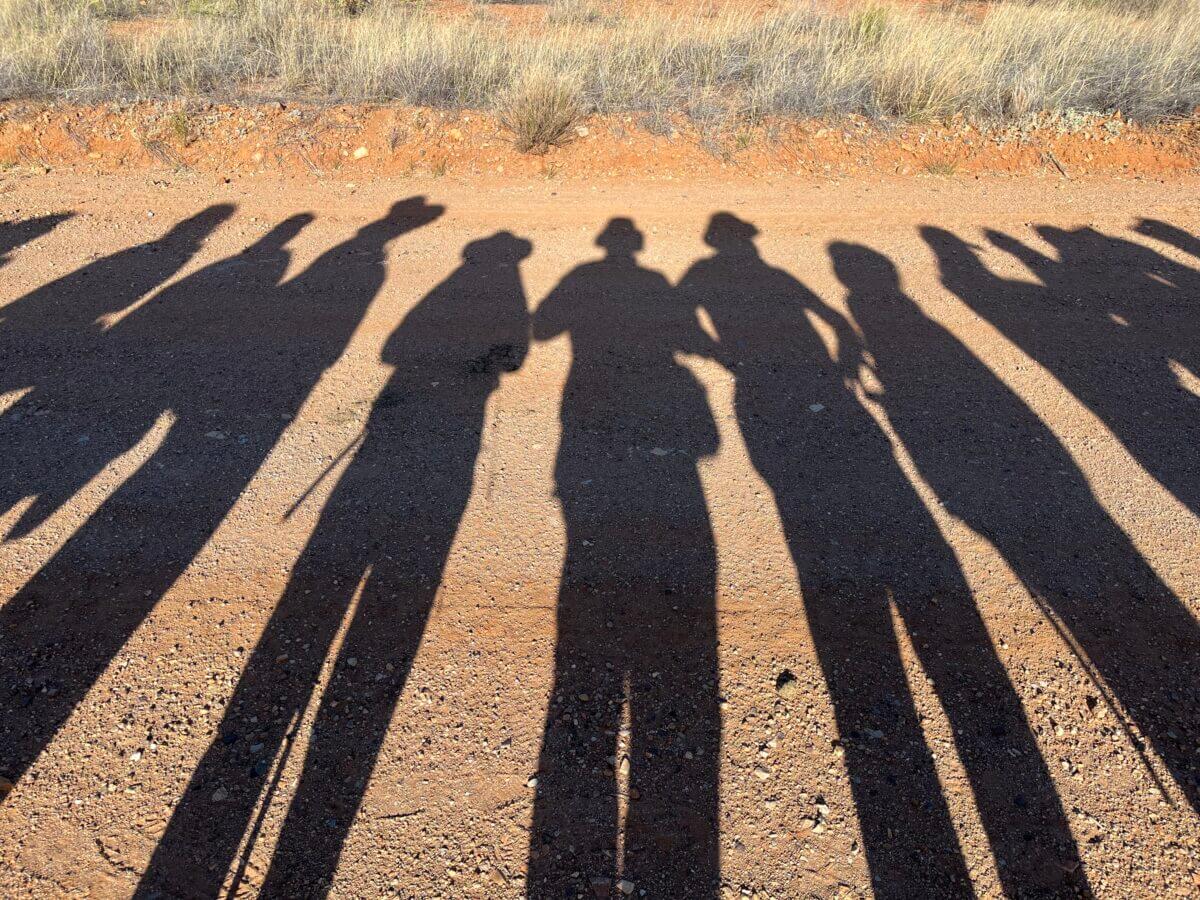
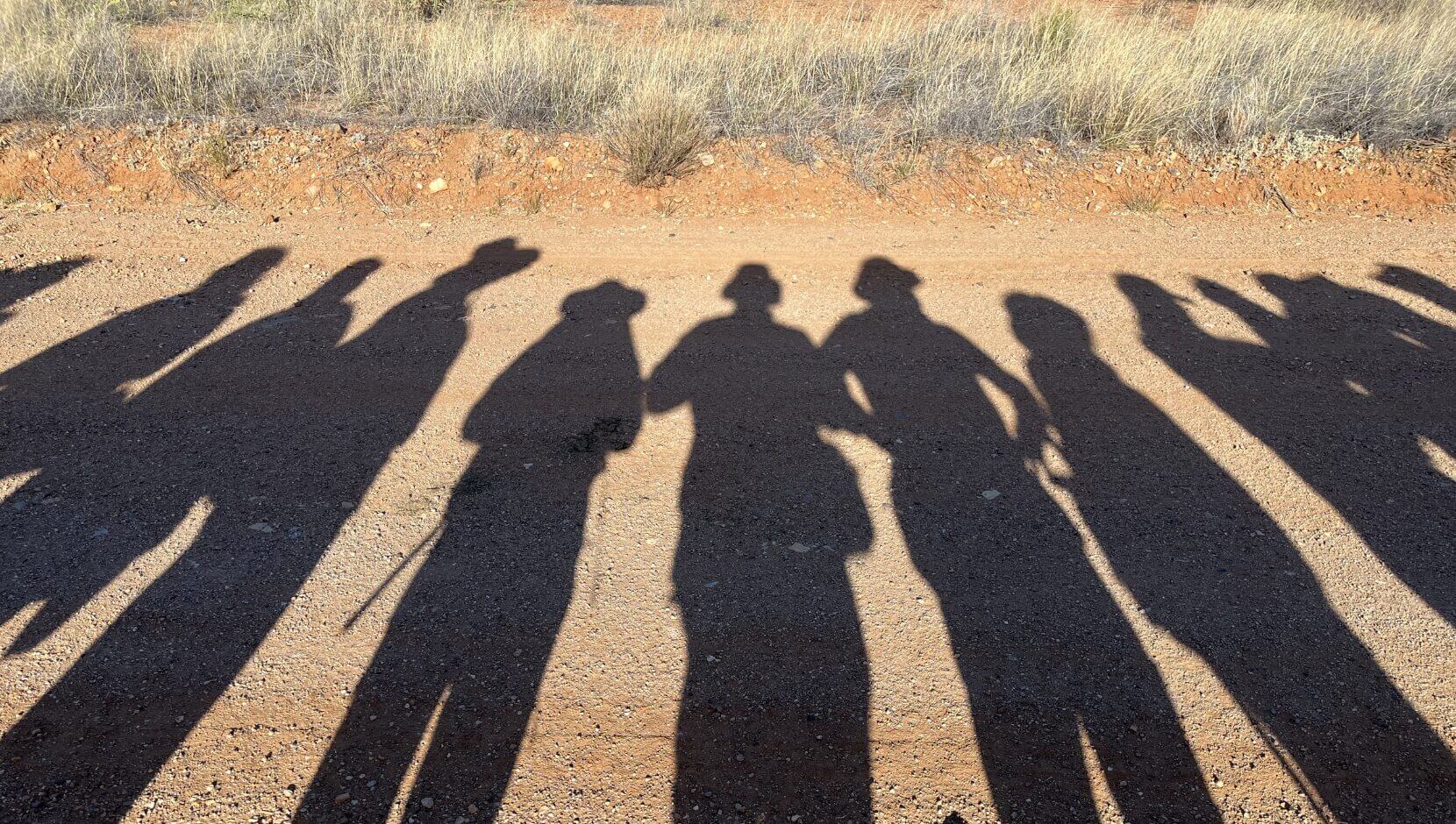
We shared breathtaking sunrises, sunsets, and the beauty of the sacred mountains ringing our path. As I walked with the group one morning, we stepped aside to let the support vehicle caravan pass. The bright morning sun revealed us as shadows. In that moment, we could have been anyone, on any path, striving for a better life, working together toward the shared goal of safe passage.
The group moved as one, supporting the pace of the slowest among us. Each person carried one or more white wooden crosses – each representing a soul who perished in their attempt to migrate. Some bore names, but many, too many, were marked “Desconocido” or “Desconocida,” meaning that the human life represented remained unidentified.
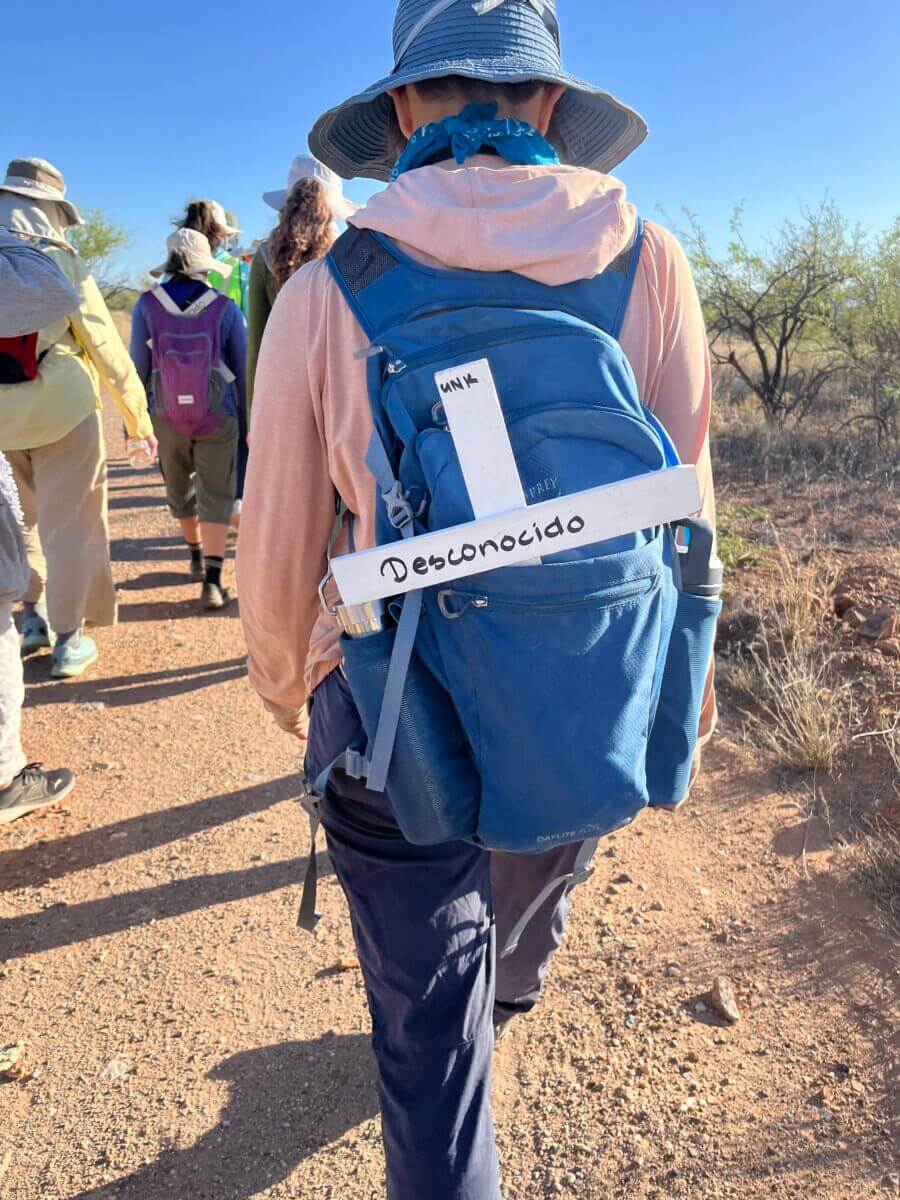
We were there to walk. We were there to learn in a way that is only possible when directly feeling the environment and physically pushing ourselves, while reflecting on the journeys of those who make this trek without the benefit of unlimited water, snacks, or shaded rest.
We were there to create community as a combination of people that had never existed before and will never exist again in precisely that configuration. With each step, we honored those who traveled before us and fueled our hopes for a more just world. We re-committed ourselves to defending the human right of migration and fighting for policies that affirm all people’s inherent dignity.
We moved away from fear and toward one another in pursuit of a shared future.
Stay connected to UUSC’s Resistance Network for advocacy opportunities to fight for the right to migrate and defend human dignity. Join us at uusc.org/network.


