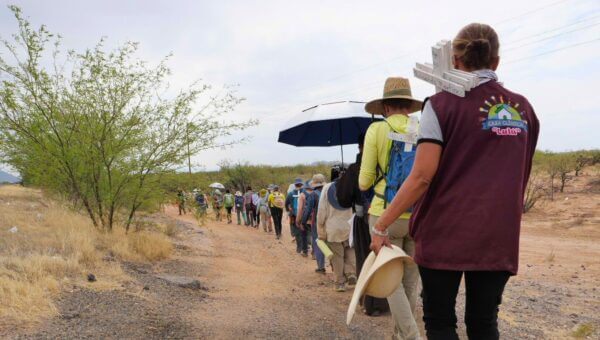
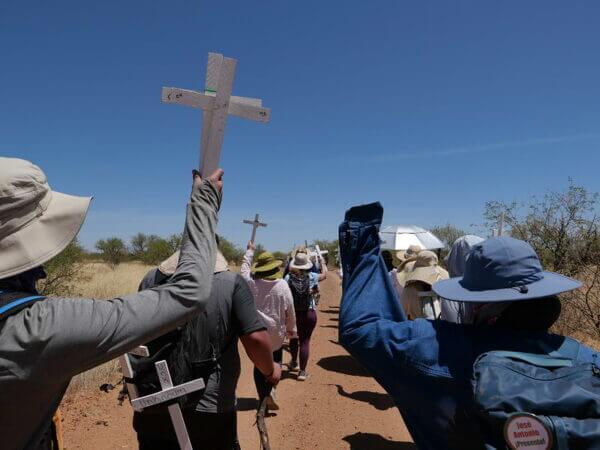
On a Sunday afternoon in Naples, Florida, most people around the city are finishing up their weekend shopping, relaxing at the beach, or teeing up at the golf course. But down a quiet road in the eastern part of the city, members of the UU Congregation of Greater Naples (UUCGN) are piling into two chartered buses headed out on a 70-mile journey to one of the most infamous detention facilities in the country: Alligator Alcatraz.
Donald Trump’s administration opened the facility, formally named the South Florida Detention Facility, on July 3, 2025—hours before the country’s 249th anniversary of freedom from tyranny. To date, over 6,700 people have entered Alligator Alcatraz, though the number of current residents is unknown. In December 2025, Amnesty International reported that detainees are subjected to filthy and unsanitary living conditions: toilets constantly overflow into sleeping quarters with feces and sewage, shower access is limited, and food is often spoiled or contaminated by pests. Lights in the facility are kept on 24 hours a day, and cameras (including those above the toilets) are constantly recording, seriously impeding people’s ability to rest, secure privacy, and maintain dignity. Access to medical care is often limited if not outright denied.
In addition to the abuse and neglect inflicted upon the incarcerated people, the detention facility harms the land it sits on and the stewards of that land. For generations, the Miccosukee Tribe has called the Florida Everglades home, and they have worked to protect and conserve its waters, plants, and animals for future generations. The construction and use of Alligator Alcatraz directly threatens the work of the tribe. The facility is located on federally protected land important for local endangered species. With increased light andsound pollution and vehicular traffic from the center, these animals are put at increased risk of traffic accidents and disrupted sleeping and feeding patterns. The facility has also led to protected wetlands being paved over with asphalt and surrounded by barbed wire.
Reverend Tony Fisher and the UUCGN congregation recognize the importance of speaking out against the existence of Alligator Alcatraz and all U.S. immigration detention centers. Each Sunday since the center was opened, members of UUCGN have joined a group of weekly protesters outside Alligator Alcatraz for a peaceful interfaith vigil.
In January 2026, UUSC accompanied the team at the vigil which has grown exponentially since its start. Additional buses from Sarasota and Miami and several carloads of participantsfrom around Southern Florida joined the two buses from Naples. Participants were of all ages, from infants to a 97-year-old man who spoke about his own experience as an undocumented person in the 1930s. One of the younger attendees, a high schooler, underscored that “Alligator Alcatraz is not just a name it’s […] a symbol of how far we have allowed our humanity to erode.”
The weekly vigils not only give people space to safely protest the detention center, but also provide opportunities for community connection and healing. The family members of multiple vigil participants are detained at Alligator Alcatraz, and the vigils have brought them together to create a network of support. “When I came here the first time,” says Arianne Betancourt, whose father is currently confined to Alligator Alcatraz, “I was absolutely broken. I was lost. I had no idea what was coming […] Week after week I came here and I felt stronger. I feel love, empathy, compassion from absolute strangers.”
The weekly vigils will continue until the detention facility is closed.
At UUSC, we believe that migration is a human right. We and our global grassroots partners defend this right in the U.S. and around the world. Learn more about our migration justice work, and support our partners as we build solidarity beyond borders.