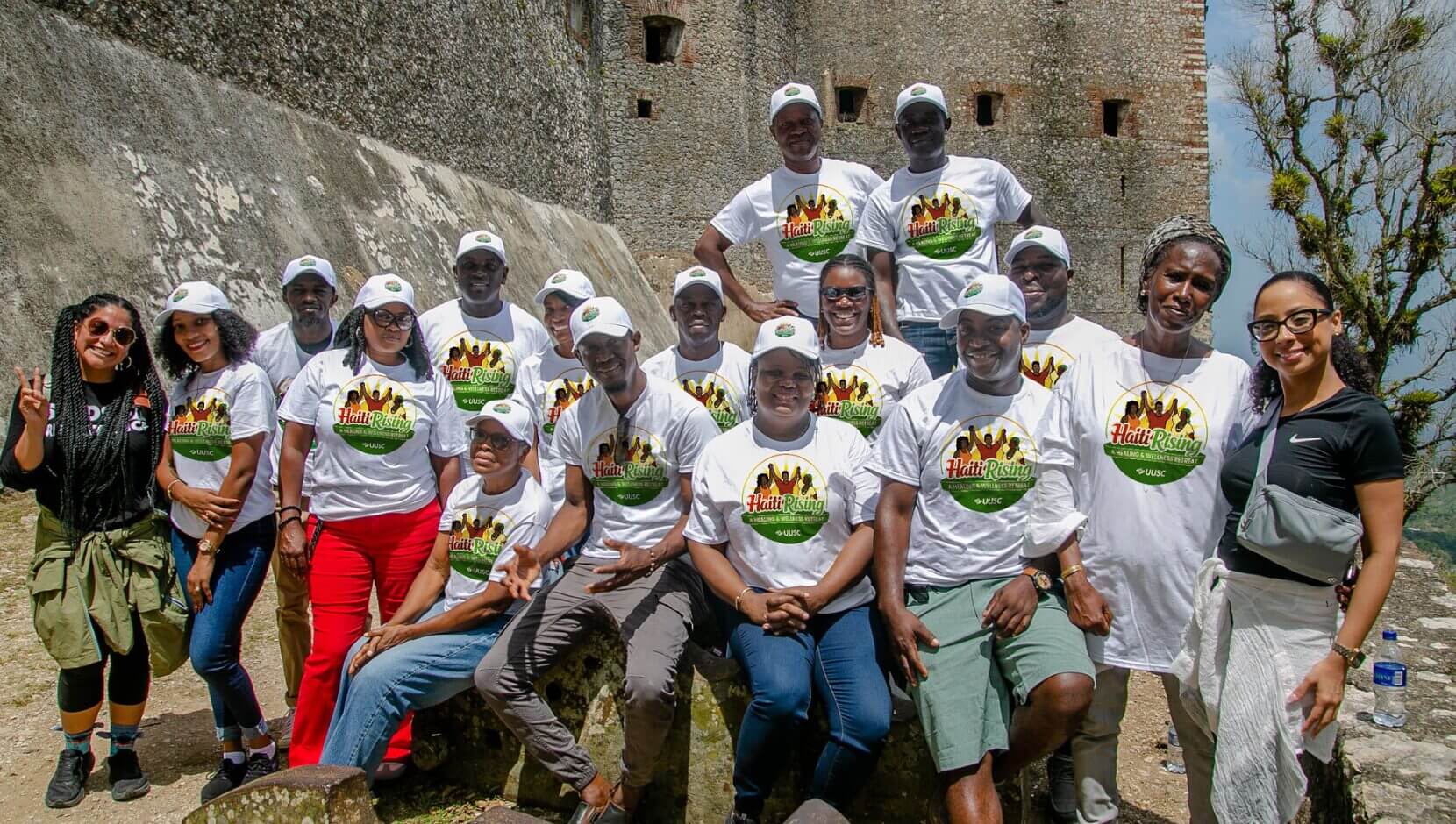
For Haitian Heritage Month, I’ve been reflecting a lot on what it truly means to celebrate Haiti, not only as the first free Black republic, but as a country that continues to carry the weight of a history the world often refuses to fully reckon with.
A few months ago, I attended a closed convening in the Bahamas alongside Haitian organizers, advocates, and movement leaders, and allies focused on broader conversations surrounding reparations and restitution for Haiti. I left feeling inspired and also thinking deeply about the gap that often exists between how Haiti is celebrated symbolically and how Haiti is treated politically and economically. Every Haitian Flag Day and throughout the month of May, we celebrate the revolution, the flag, the culture, the music, the food, and the resilience. But what often gets left out, or treated as a side conversation, are the historical and economic systems that continue to shape Haitian lives today.
Mario Joseph, the late human rights lawyer from the Bureau des Avocats Internationaux (BAI), once described Haiti as “holding the key to reparations.” His words have stayed with me and carry the meaning that Haiti should not be viewed only through the lens of crisis, but as central to a global conversation about justice, accountability, and historical truth. Haiti is the catalyst for change; this is proven time and time again.
Reflecting on these broader conversations around reparative justice also pushed me to think deeply about the long historical arc that continues to shape Haiti today. Haiti’s current realities cannot be separated from the history of colonization, slavery, the 1825 independence debt imposed by France, foreign intervention, land dispossession, and systems of economic extraction that disproportionately impacted peasants and working-class Haitians for generations.
Often, these histories are treated as distant events rather than ongoing forces that continue to influence political instability, migration, inequality, and questions of sovereignty today. These patterns are not only historical. They continue into the present through land dispossession, environmental harm, and economic projects that often exclude the very communities most impacted. These issues are seen in places like Caracol, where peasant families were displaced from their land in the name of development.
For me, understanding Haiti also means understanding this historical and economic context, and recognizing that reparative justice is not only about acknowledging past harm, but about supporting Haitian-led visions for dignity, self-determination, and collective repair moving forward.
As a Haitian diaspora professional, I think often about our responsibility within these conversations. Many of us in the diaspora have had access to education, mobility, and professional spaces because of sacrifices made by generations before us. That reality comes with a duty not only to speak about Haiti, but to remain grounded in and accountable to the voices of those who have borne the greatest costs of Haiti’s history: peasants, rural women, market women, Madan Sara, workers, displaced families, and grassroots organizers who continue sustaining Haiti despite generations of debt, extraction, instability, and abandonment.
We also have a responsibility to go beneath the surface of what it means to understand our rasin. That means connecting with diasporic organizations leading important work across the United States, Canada, France, and beyond, while also remaining deeply connected to people on the ground in Haiti and the organizations leading the work there. It means understanding our positionality and working in collaboration with our communities to shape our role in this broader movement for justice. We each bring something valuable to the table, and we each have something to learn from one another.
My call to action for other members of the diaspora is to not let one-sided narratives about Haiti dictate whether we return, engage, or invest in our communities. Instead, we should work toward a collective vision of reparative justice and rebuilding what is rightfully ours. Haiti belongs to all Haitians, even when borders separate us.
Haitian Heritage Month should absolutely be a celebration of our culture, spirituality, language, and revolutionary legacy. But it should also be an invitation to learn, to remember, and to ask harder questions about justice and accountability. To celebrate Haiti honestly means understanding both the beauty of our history and the price Haiti has paid for daring to be free.


